I Tried Asking 'What’s the Real Cost for a Cable Arm?' Here’s What I Learned the Hard Way
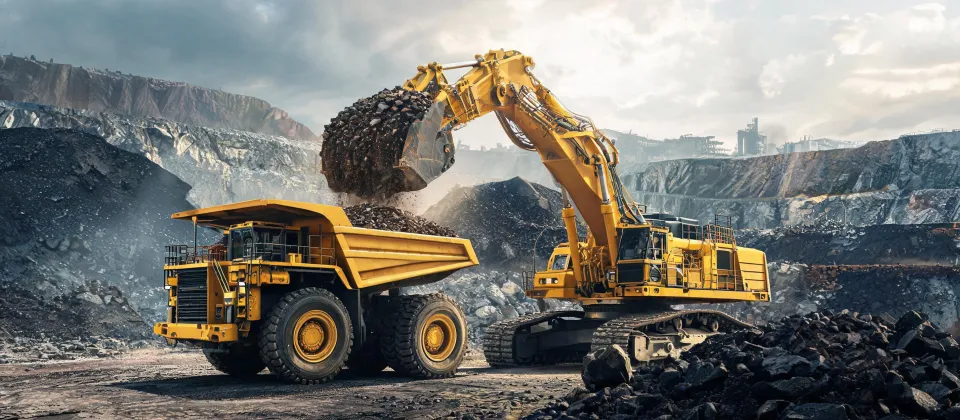
Ask for a full, itemized quote that includes all components and shipping before you ask for a discount. If a vendor can't give you that in under an hour, find another vendor. That's the single most important rule I've learned managing equipment orders. I didn't always follow it. The result was an $800 mistake that my department head still remembers.
I manage purchasing for a mid-sized energy equipment distributor. Roughly $300k annually spread across maybe a dozen vendors. My job is to keep operations running—which means ordering cable arm components, among other things. In 2022, I needed a batch of cable arm finishers and some arm extensions. Found a supplier with a great unit price. The 'quote' was just a total number. I approved it. The shipment arrived with missing flanges, and the cable arm bucket I ordered didn't fit our standard boom mount. The 'low price' turned out to be 35% higher once I factored in the rush order for the correct flanges and the labor cost to adapt the bucket.
Reference: Industry standard for cable arm system compatibility follows NEMA and SAE mounting specifications. “Not all buckets are universal; verifying the mount type prior to ordering is critical to avoid field modifications,” is standard advice from most OEMs.
5 Questions That Save Time & Money
After that experience, I developed a checklist. It's not rocket science, but it works. I now send this to every vendor before I even consider their quote for cable arm components.
- Define the exact component: “Is this a cable arm finisher for a 4-inch arm, or the extension piece?” Be specific. A “cable arm” can mean a finisher, an extension, a bucket, or a complete management system. The price and compatibility vary wildly.
- Get shipping & handling costs upfront: For heavy industrial pieces, freight can be 15-20% of the cost. A cheap component becomes expensive if it requires a special truck.
- Clarify the mount type: For cable arm buckets and extensions, ask: “Does this use a standard pin mount or a custom weld-on?” I once ordered a bucket that needed a $150 adapter plate.
- Ask about missing pieces: “Are the mounting bolts and bushings included?” Some suppliers list them separately. This can add $50-100 to a simple finisher or extension order.
- Get a lead time commitment in writing: “What is the guaranteed lead time, and what are the penalties for being late?” I've waited 8 weeks for 'in-stock' cable arm extensions. Our project lost 2 weeks of productivity.
I only believed in checking these five things after I ignored them once. They warned me about a 'cheaper' vendor. I didn't listen. The 'cheap' quote ended up costing 30% more than the 'expensive' one.
Why Total Transparency Matters More Than a Low Base Price
Here’s the thing I've learned over 5 years of managing vendor relationships. The vendor who lists all fees upfront—even if the total looks higher—usually costs less in the end. The one who gives you a 'great unit price' but hides the setup fees, the shipping surcharges, or the missing components is the one who will cost you money and headaches. I've learned to ask "what's NOT included" before "what's the price."
This applies directly to cable arm components. A cable arm bucket may be cheap, but if you need a custom mount, a specific hydraulic line, or a different lock cylinder, the 'cheap' bucket becomes a big project. The best suppliers I work with now give me a precise breakdown: the arm finisher itself, the mounting hardware, the shipping weight, and the lead time. No surprises.
When the Advice Doesn't Apply
To be fair, this approach assumes you have time to check. If you need a cable arm component same-day for an emergency repair, you go with whoever has it in stock. You pay the premium. But for 90% of our orders—planned maintenance, stock builds, system upgrades—checking these five things saves hassle. Also, this works for us as a mid-size B2B company with predictable ordering patterns. If you're a large-scale mining operation with a dedicated procurement team, your calculus might be different. I can only speak to managing a smaller department where every mistake is visible to finance.
Granted, my checklist requires more upfront email work. But I've found that eliminating even one 'surprise' cost pays for the time. For the cost of a single wrong cable arm bucket, I could have paid for a premium version of the right one.
So, for the straight answer on cable arm ordering: Don't ask "what's the price"—ask "what's the total, itemized cost, including all parts, shipping, and lead time, for the specific component I listed?" The vendor who can answer that quickly is usually the one to trust.