Most Cable-Arm Failures Start Long Before the Cable Arm Is Installed
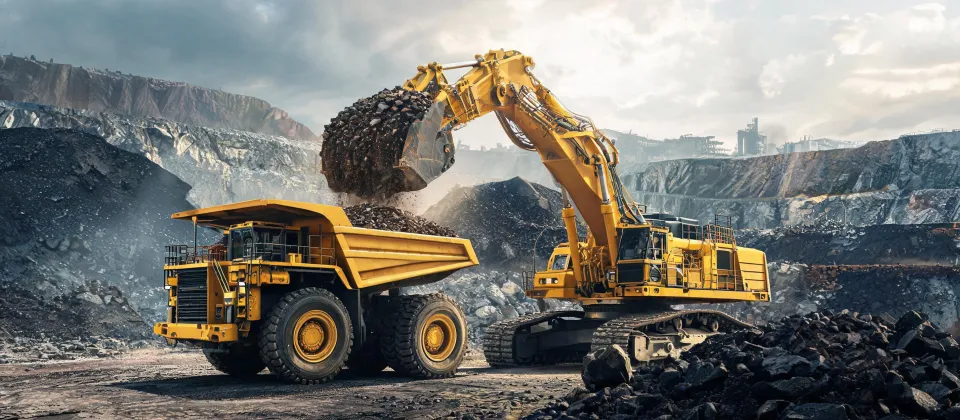
If you landed here while searching for Cable’s mechanical arm from Deadpool 2, wrong arm. I work on the boring version: cable-arm components for EV charging, mining, and energy installations. If you manage industrial equipment, this article is for you.
I approve cable-arm parts for a living. Over the last four years, I’ve reviewed roughly 800 unique cable-arm components—finishers, extensions, buckets, brackets, and complete cable-arm management systems. In 2024 I rejected about 11% of first deliveries because of coating issues, weld profile, dimensional tolerance, or missing test documentation. That’s my job: keep a bad batch from becoming a customer’s outage.
Here’s the opinion that doesn’t make me popular in procurement: most cable-arm failures are spec failures, not field failures. The part fails later, but the cause was decided earlier, on the order sheet. That matters because “we’ll save money now” often shows up later as an emergency replacement.
A Specification Is Not a Thick Binder
A good cable-arm specification isn’t bureaucracy. It’s a communication tool. Without it, every person in the chain can honestly say they meant something different by “heavy duty.” Engineering means the arm passes a 2,000-cycle test. Sales means the paint looks thick. The installer means the part fits today. Those differences get expensive quickly.
When a supplier says “industrial grade,” I ask for the measured values behind that phrase. Per FTC guidance, advertising claims should be substantiated, but I don’t want a file folder of adjectives. I want documentation of the extension’s rated load, surface treatment, and cable bend radius. If a supplier can’t provide it, that’s information too.
The Lower-Cost Extension That Cost Us $18,000
Here is a real example from our own process. We were qualifying a lower-cost source for a cable-arm extension. Same mounting pattern. Same nominal length. We were behind schedule, and the engineering team wanted a first-article test. I overruled it. That was my mistake.
The part looked fine. But it didn’t give the cable the same internal bend radius as our controlled version. The first sign was cable jacket wear. Then two installations were damaged. Replacement, labor, travel, and downtime added up to about $18,500. The supplier said it was “within industry standard.” Maybe it was. Our standard was tighter, and I approved the release anyway.
I only believe the full verification process now because I ignored it once. The lower quote was not lower. It was billed later.
That is why I put cable-arm pull tests and bend-radius checks into every source qualification. Not because those tests are fun. Because a component that fails after installation is always more expensive than a component that fails during inspection.
Custom Work Has a Place. So Does Standardization.
Let me not exaggerate. A local machine shop can be the right answer for a one-off bracket or a retrofit. I’ve specified custom parts myself. But for operations that buy multiple cable arms—or expect to expand an EV charging site later—standardized components and clear specs are a better use of time. Once you have an interchangeable cable-arm extension or finisher, a future repair doesn’t require redrawing the whole assembly. Repeatability is a form of speed.
My experience is mostly from fleet-type operations: substations, mining maintenance, and EV depots where the same installation repeats. If you have one charger and one simple arm, some of this can feel like overkill. That’s fine. The principle still applies: agree on the specification before buying, not during the blame meeting.
The Project Divorce Question
In project post-mortems, I see the same split again and again. Engineering thinks the spec was clear. Purchasing thinks the lower quote saved the budget. Maintenance is left with the outcome. I call that a project divorce. It is more expensive than the conversation would have been if everyone had agreed on the right details earlier.
A little extra precision up front avoids a messy separation later.
Before Your Next Cable-Arm Order
Ask these questions before any cable-arm purchase:
- Can you send the controlled drawing for this exact cable-arm model, not a general brochure?
- What pull-test report supports the rated working load? Ask to see the test setup.
- What are the bend-radius and clearance requirements for the cable this arm will manage?
- Will you notify me if the coating, material source, or manufacturing location changes?
If the answers are slower than the quote, you’ve learned something about the next three years.
My Final Answer
The most efficient cable-arm purchase is made by people who know what they are buying. That sounds obvious. It isn’t common. If I have to be the one who rejects a batch and delays shipment, I will do that before I let a bad part become someone else’s outage.
Efficiency isn’t just moving faster. It’s not having to move again. The best cable-arm component is not necessarily the premium-priced one. It’s the one that matches the specification you actually need, from a supplier that can prove it. Anything else is not a shortcut. It’s a bill waiting to be delivered.