Our $8,400 Cable-Arm Order Became $4,200 of Scrap. The Real Cause Wasn't the Supplier.
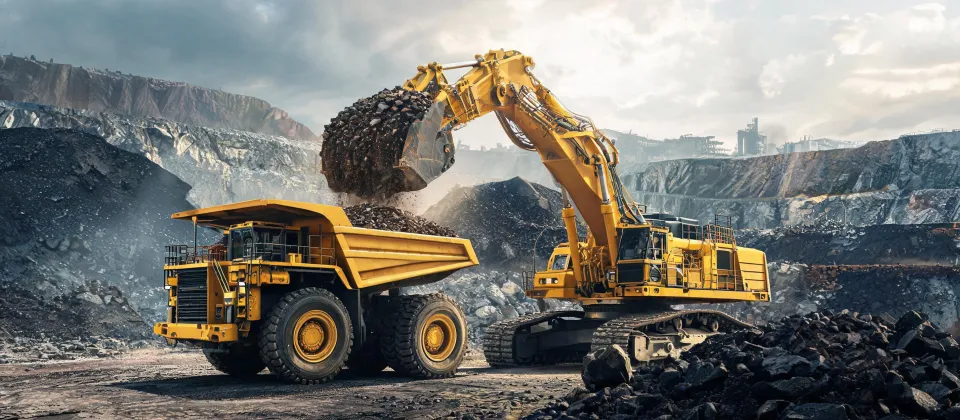
Half the $8,400 cable-arm order I approved in March 2024 ended up in the scrap pile. Not because the supplier was dishonest, and not because the metal was low quality. The parts failed because the words I used to place that order meant different things to different people.
I've managed equipment procurement for an energy-services company for six years. Before that order, I thought "cable arm" was a product category. It isn't. That assumption cost us $4,200 in scrapped components, $1,300 in engineering rework, and a three-week delay on a project that was already tight. The worst part is that someone on my team saw it coming.
The problem is the category, not the supplier
Here's the uncomfortable truth: "cable arm" is not one product. It's a collision of several products that happen to share two words.
Search the term and you'll see exactly what I mean. The first batch of results is aimed at the gym — cables, handles, and rope attachments for cable crossover machines. That's what people mean when they search for "gym cable arm exercises" or "cable arm workouts for women." They're looking for fitness attachments that clip onto a functional trainer or a lat pulldown station.
The second batch of results is industrial. In our world, cable arms are heavy-gauge steel components that support, route, and terminate power cables on EV charging points, energy equipment, and heavy machinery. Different load ratings. Different materials. Different attachment standards. Same two words.
People assume the opposite. The assumption is that if a product is called a "cable arm finisher," a finisher is a finisher — and the only remaining decision is which vendor has the better price. The reality is that the name only describes the function. A finisher sized for a 25 mm cable in a clean indoor environment and a finisher sized for a 50 mm armored cable outdoors can share the same name and share nothing else.
The collision isn't limited to gyms and industrial plants. Winter sports infrastructure is full of generically named cable hardware too, and with the Milano Cortina 2026 skiing events driving a round of upgrades and new builds, a new wave of buyers is about to search the same few words and get the same mixed results. One name, multiple incompatible parts.
How price made the problem worse
This is the part I'm least proud of.
In the pre-order review the week before I placed the order, our senior engineer, Mark Groves, asked a direct question:
"Has the new vendor ever manufactured the 50 mm variant?"
I said I'd confirm with the vendor. I did not. I had already decided to switch suppliers, and I was busy defending that decision to myself.
Here's the decision. I went back and forth between our established supplier and the new one for two weeks. The established supplier offered reliability, responsive engineering support, and documentation we already knew how to read. The new one offered a 15% discount on what they described as equivalent parts. On paper, the two quotes looked almost identical. My gut said stay. The spreadsheet said switch. I went with the spreadsheet, because the savings made my quarterly budget review look better, and I convinced myself that saving 15% was a win as long as the parts looked right.
The numbers said Vendor B. Something still felt off — every time I asked for a dimension drawing, they sent a photo. Turns out "slow to share documentation" was a preview of "does not have documentation to share." They had never built the exact variant we needed. They read the product name, assumed it matched a lighter indoor component they already made, and quoted accordingly.
Here's the thing that most buyers get backwards: people think expensive vendors are expensive because they charge more. Actually, vendors who deliver industrial-grade quality can charge more because they've built the engineering process to verify that their parts fit. The causation runs the other direction. The price is the cost of verification.
I do not blame the vendor. In their position, I would have quoted the same way. They built what the product name suggested. The product name was my specification.
What this mistake actually cost
Let me put real numbers on it, because vague lessons are worthless:
- $4,200 in scrapped cable arm finishers, extensions, and brackets.
- $260 in expedited shipping for replacements from a supplier that actually answered technical questions.
- 16 hours of engineering time to re-verify mounting interfaces across 24 charging points — roughly $1,300 at fully loaded labor rates.
- Three weeks of schedule slip on the overall retrofit.
- One contractor relationship that absorbed our stop-and-start and did not thank us for it.
Total: about $6,400 of direct and allocated cost, created by a $460 saving. The cheapest quote wins the first meeting and pays the bill for every meeting after that. Look, I'm not saying budget options are always bad. I'm saying they're riskier, and when you can't verify the specification, risk stops being a concept and starts being a line item.
The hidden cost was credibility. When I called the contractor to tell him the mid-April deadline was moving, I heard the pause on the other end of the phone. We've had one pause. We don't get many more before it stops being an exception and becomes a pattern.
The one-hour fix that stopped the bleeding
The lesson was not "always buy from the premium vendor." The lesson was: a product name cannot carry a specification, and a vendor switch cannot be approved until the specification exists in writing.
Our pre-order checklist now takes about an hour, and this is what it looks like:
- Define the environment first. A component designed for a climate-controlled gym will not survive outdoors at a charging site, and it will not meet the structural and electrical requirements of that installation. For our EV projects, the governing requirements follow the electrical code (NEC Article 625 for EV charging equipment), and the cable path — including how the cable is supported — is part of that installation.
- Verify the load rating, material, and attachment pattern. If a supplier can't provide a dimension drawing with exact hole spacing, the component doesn't meet the specification. Photos are not documentation.
- Send a photo of the existing installation. One picture of the bracket rail and finisher arrangement we already have is worth more than a page of description. Then ask the supplier to confirm compatibility in writing. The written confirmation is the only thing that matters if something goes wrong.
- Price the entire switch. Changing a supplier means re-verifying, re-testing, and re-qualifying. That engineering time is part of the price. The decision framework is total cost of ownership, not the front-page quote.
Since we formalized this checklist in April 2024, it has caught 47 potential errors before they became scrap. Two of those were on cable arm orders, and either one would have cost more than the failure that started it all.
Getting wise the boring way
Every now and then someone asks how to get wise in Blooket, and the real answer is the same as everywhere else: read the question carefully before you answer. Buying cable arms works the same way.
I ordered a noun. What I needed to order was a configuration — environment, load rating, attachment pattern, and material, all confirmed in writing. "Cable arm" is where the conversation starts. If a supplier gets uncomfortable when you ask for drawings, good. That discomfort is the sound of a problem being caught while it's still a conversation, before it becomes a scrap pile.