The 'Cable Arm' Confusion Problem: What $14,000 in Mistakes Taught Me
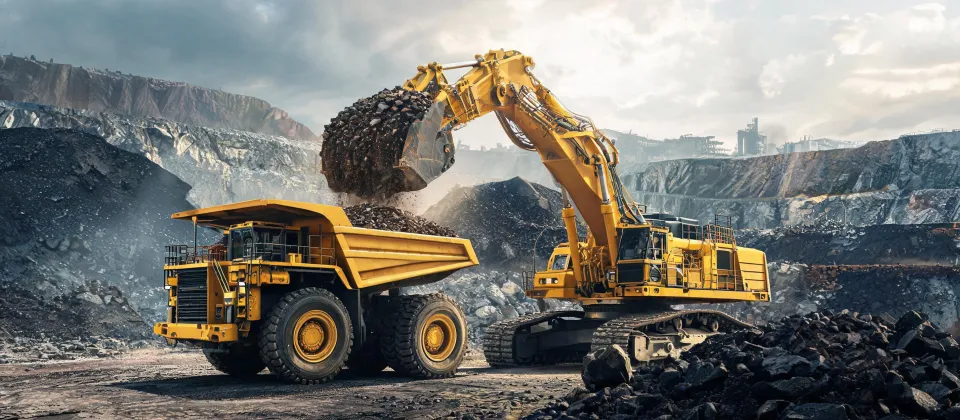
I've been ordering cable arm components for energy and mining clients since 2017. In that time, I've made mistakes that added up to roughly $14,000 in wasted budget—wrong specs, wrong materials, wrong assumptions. Not proud of it. But I documented every failure, and now I maintain our team's checklist so nobody repeats what I did.
The biggest lesson? Most cable arm problems aren't engineering problems. They're terminology problems.
Search for "cable arm" and you get:
- Workout videos for cable machine exercises (the "cable arm workout women" crowd is huge)
- Server rack cable arms for data center network cabinets
- EV charging cable support arms
- Heavy-duty cable arm buckets and finishers for mining equipment (what we actually make)
It's a mess. And it costs real money.
The Surface Problem: You Can't Find What You Need
Here's a scenario I've watched play out three times in the last 18 months. A procurement manager types "cable arm" into Google, finds a product that looks close enough, orders it, and discovers it's the wrong class of equipment entirely.
One client ordered what they thought was an industrial cable arm finisher. What arrived was a server rack cable arm—about a foot long, designed to route Ethernet cables inside a network cabinet. They needed a cable arm that mounts to a bucket wheel excavator. Put another way: they needed something the size of a small car, not something the size of a shoebox.
That mistake cost about $3,200 in restocking fees plus a three-week project delay. The vendor handled it well, but the client's engineer had to redo the entire spec. In this industry, three weeks means money.
If you're not in the industrial space, you might not realize how completely different contexts use the same phrase. A gym cable arm attachment is a totally different product from what we build. But to an algorithm—or to a purchasing agent who's new to the category—they share a name. That's all the system knows.
The Deep Reason: Nobody Owns the Terminology
Here's what took me years to understand: "cable arm" is not a single product category. It's a description that different industries applied to completely different solutions:
- Fitness equipment: Cable arms on gym machines, popular for resistance training
- Data centers: Server rack cable arms that manage cables within equipment racks
- EV charging: Cable support arms that keep charging cables off the ground
- Energy and mining: Heavy-duty cable arm buckets, finishers, and extensions for cable shovels, draglines, and excavators
The term is so generic it's almost useless without context. That's the real problem—it's not a marketing issue, it's an information architecture issue.
I can only speak to my context: heavy industrial equipment. If you're shopping for server rack management or a gym cable attachment, the calculus is different. But the underlying issue is the same. You have to know exactly what class of product you need before you compare specs.
The Cost: What Confusion Actually Does to a Project
Let me break down what I've personally spent learning this lesson.
In 2019, I spec'd a cable arm extension for a client without verifying the bolt pattern against their existing equipment. It looked fine on my screen. The result came back: 12 pieces, $4,100, straight to the scrap yard. That's when I learned to always ask for the equipment serial number before ordering. Not the model. The serial number.
In September 2022, we had a cable arm finisher order for a mining operation. The client's engineer was convinced they needed a specific aftermarket part. Turned out they were looking at a finisher for a different brand of machine. We caught it during a pre-production review, but not before the project schedule absorbed a week of back-and-forth. That one was about a $7,000 order, but the delay actually cost the client more than the hardware.
And then there's the credibility cost. When you order the wrong component, your operations team starts second-guessing everything you do. That's not entirely bad—external validation is healthy—but the trust erosion is real.
This problem isn't going away. The market is fragmenting further. EV charging cable arms are becoming standard infrastructure, and large-scale events like the 2026 Winter Olympics skiing venues need serious cable management for broadcast and data. The term "cable arm" will appear in more contexts, not fewer.
The Material Question Nobody Asks Early Enough
A related mistake I've made: not asking about materials soon enough in the conversation.
For industrial cable arms, material choice matters enormously. Steel is heavy and strong, built for massive excavator applications. Fiberglass or composite is lighter and corrosion-resistant, which matters in certain mining environments. And then there are covers—canvas, polymer, or bare metal—each with a different purpose depending on the conditions.
The word "canvas" is interesting here. In our industry, it refers to protective cable covers on certain cable arm assemblies. In most other industries, canvas means something completely different. I once had a client ask for a "canvas" product, and I assumed they meant the fabric cover option for a cable arm bucket. They actually wanted to see a drawing—a canvas, like an artist uses. We had a laugh about it, but it highlighted the same theme again: same words, different worlds.
The lesson: define materials and construction in writing, with photos, before you commit to a quote. If there's any ambiguity about whether the part is steel-fabricated or composite-molded, get it in writing before the PO goes out.
The Difference Between Hawk and Eagle Problem
My colleague puts it this way: understanding product variants in this industry is like understanding the difference between a hawk and an eagle. Both are birds of prey. Both look similar from a distance. But the behavioral details, size, and capabilities are meaningfully different. If you need an eagle, a hawk won't do the job.
That's exactly how cable arm variations work. A cable arm bucket for a P&H 4100 is not the same as one for a Komatsu excavator. A cable arm finisher for a dragline won't fit a shovel. Mount geometry, pin sizes, load ratings—all different. A vendor who says "we'll make it fit" without asking for detailed measurements is setting you up for the exact kind of failure I've experienced.
Ask the question: what's the difference between this variant and that one? If the answer doesn't reference your specific machine model and serial number, the salesperson doesn't have the expertise you need. I say this as someone who learned it the hard way in 2020, when I sold a client a cable arm extension for a machine that turned out to be a different generation than we'd assumed. If I remember correctly, that was around Q2 2020. Don't quote me on the exact month.
The OEM vs. Aftermarket Decision
For what it's worth, the "buy from the OEM or go aftermarket" decision has kept me up at night more than once.
In March 2021, I went back and forth between recommending an OEM cable arm bucket and an aftermarket one for two weeks. The OEM option was about 40% more expensive but had documented fitment history. The aftermarket option had better lead time and a lower price. On paper, aftermarket made sense. But my gut said the client couldn't afford any fitment issues—they had a production shutdown window of only four days. Ultimately, I recommended the OEM part, and the client agreed.
I've second-guessed that decision ever since. Not because it was wrong, but because I can't prove the aftermarket part wouldn't have worked perfectly. This is one area where our industry doesn't serve customers well. The aftermarket parts market has a huge quality range, from excellent manufacturers to guys working out of a shed. It's genuinely hard for a buyer to tell the difference.
I'd rather spend 10 minutes explaining the options than deal with mismatched expectations later. An informed customer asks better questions and makes faster decisions. That's just good business.
The Checklist I Wish I'd Had
After the third material rejection in Q1 2024, I built a pre-purchase checklist for our team. It's not complicated, but it's caught 47 potential errors in the past 18 months:
- Confirm the machine model, year, and serial number with photo evidence. If the client can't provide it, the order doesn't move.
- Verify mount geometry: bolt pattern, pin diameter, load rating. All in writing.
- Clarify material and construction: steel type and thickness, composite spec, or whether covers should be canvas, polymer, or bare metal.
- Confirm the use environment: temperature, moisture, abrasives, operator habits. What works in a copper mine won't necessarily work in an underground coal operation.
- Get the dimensional drawing before fabrication, not after. A five-minute check saves a five-week rework.
This worked for us, but our situation is specific. We're a mid-size manufacturer with a narrow product range. If you're dealing with highly custom cable arms in unusual applications, this checklist will need to grow. The principle still applies: document before you commit.
The Bottom Line
The cable arm market is fragmented. The terminology is confusing. The costs of getting it wrong are substantial, both in money and in schedule.
If you're looking for industrial cable arm components, know exactly which category your need falls into. If you're looking for fitness equipment, you're in the wrong place. If you're looking for server rack cable arms, there are specialized vendors for data center applications. And if you're looking for heavy-duty cable arm buckets, finishers, or extensions for mining and energy equipment, ask the hard questions up front.
The vendor that pushes back with questions is the vendor worth working with. I know, because I've been on both sides of that equation.