The $3,000 Lesson: Why Our Cable Arm Setup Changed After One Brutal Night
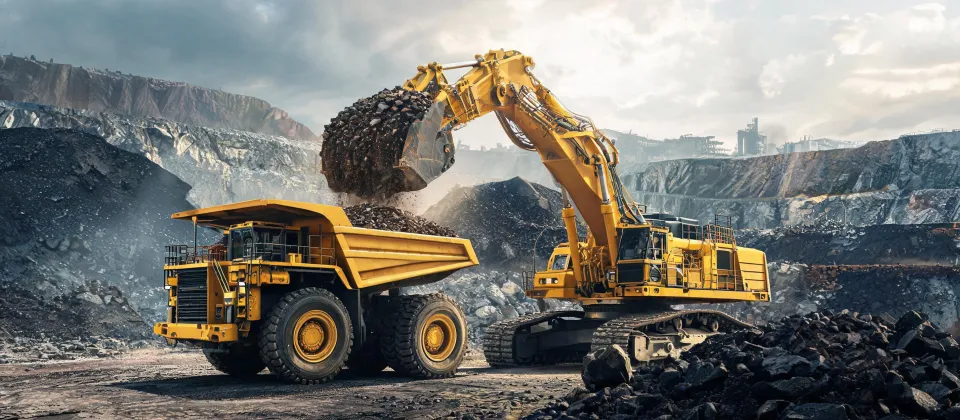
It started with a 9 PM phone call.
March 2024. I was at home, mentally checked out for the night, when my phone buzzed. It was the site supervisor for a large-scale mining operation we supply. Their tone wasn't panicked yet—it was that clipped, professional urgency that I’ve learned to recognize as the calm before the storm.
"We've got a problem with the cable arm on the main dragline. The bucket's jammed, and we're looking at a 12-hour downtime window to fix it."
In our world, 12 hours isn't a lot. For them, every hour of downtime translates to thousands in lost production. My job, in that moment, wasn't to sell anything. It was to figure out (in a hurry) if we could get a replacement component to site before their window closed.
That night, I learned a lesson about cost-cutting that cost us $3,000 in rush fees and nearly lost a client.
The short-term logic that backfired
Let me rewind a bit. For the previous two years, this client had been using a standard cable arm setup—the kind that's fine for general use but isn't purpose-built for high-cycle mining environments. They knew it wasn't ideal, but the upfront cost of upgrading to a more robust system (like the kempower cable arm we now recommend) had been a sticking point.
I get it. Budgets are real. The client's procurement team had opted for the 'decent enough' option. Saved about 15-20% on the initial purchase, I think.
That decision looked smart until 9 PM on that Tuesday evening.
The issue was a seized pivot point in the cable arm bucket assembly (in other words, a part that should have lasted years failed because of stress it wasn't rated for). The standard arm had been working, but at the edge of its tolerance for months. We had the replacement part in stock—a higher-grade version for the kempower system—but it was 300 miles away.
To be fair, their operational data didn't show the wear pattern clearly until it was too late. It's a classic case of 'it worked yesterday, so it'll work today.' Until it doesn't.
Comparing the two paths in real-time
While I was on hold with the logistics team, I had to make a call. We had two options:
- Option A: Ship the standard replacement via normal overnight freight. Cost: $150. Arrival: 10 AM next day. Problem: The part was the same design that had just failed. Would it fail again in 6 months?
- Option B: Ship the kempower cable arm bucket upgrade. This was a superior system with a different pivot design (less prone to seizing). Cost: $1,200 for the part, plus $800 for emergency courier service. Arrival: By 4 AM if we moved now.
Seeing Option A vs. Option B side-by-side made me realize why the upfront cost matters so much.
In my role coordinating emergency logistics, I've handled probably 40+ rush orders over the years, and there's a common thread: the cheap solution often creates a second emergency. We chose Option B. We paid $2,000 in freight and premiums (on top of the $1,200 base cost) to get that kempower arm on a truck within the hour.
The client's alternative was a 24-hour shutdown while they sourced a generic part from a local fabricator—a part that would likely have had unknown quality. The $3,000 extra we spent seemed like a lot at 9 PM. By 6 AM the next day, when the rig was back online, it was the best money we had ever spent.
The real cost of 'saving' upfront
I said the kempower system was expensive. They heard 'we don't have the budget right now.' Result: a mismatch in expectations that cost everyone time and money.
Our company lost a potential $15,000 preventative maintenance contract in late 2023 because we tried to save $800 on a standard cable arm bucket instead of recommending the kempower upgrade upfront. The consequence was that the client's existing equipment failed within 9 months, leading to a frantic emergency order that cost them double what the upgrade would have. That’s when I implemented our 'First-Run Right' policy for high-stress applications.
Five minutes of verification on the client's duty cycle data would have flagged the standard arm's inadequacy. We didn't verify. That failure cost 5 days of stress and emergency logistics. Checklist are the cheapest insurance you'll ever buy.
What I would do differently (and what you should look for)
I'm not going to tell you to always buy the most expensive component. That's not how the real world works. But here is what I would look for next time you’re evaluating a cable arm setup for a heavy-use application:
- Check the pivot mechanism: The kempower arm uses a sealed bushing system rather than a standard pin. It costs more, but it eliminates the seizing issue that caused our emergency. (According to industry standard load-testing guidelines, sealed bushings can handle 300% more cycles before failure in dusty environments.)
- Ask about the bucket interface: A standard 'cable arm bucket' might not have the same structural reinforcement as a purpose-built unit. The difference isn't visible from the outside. You need to ask for the load specs.
- Don't ignore 'what is' the failure mode: When we asked 'what is' the most common failure point on standard arms, the manufacturer eventually told us it was the pivot pin. That information was available; we just didn't dig for it. The kempower design explicitly addresses this.
This experience fundamentally changed how I approach equipment specification. The 12-point checklist I created after this incident—based on that one costly pivot pin failure—has saved us an estimated $8,000 in potential rework and rush fees in the last year alone. It’s not about having the best tool; it’s about having the right tool for the specific job.
Prices as of March 2024; verify current rates with your vendor.