The Cable Arm Evolution: Why Your Industrial Setup Needs a Rethink (and What I Learned From 200+ Rush Orders)
It Started With a 36-Hour Deadline
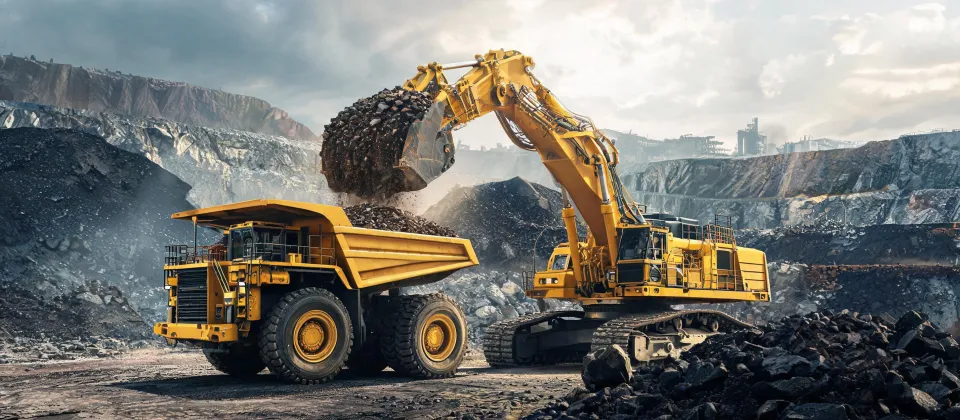
In March 2024, a client called at 4:32 PM on a Tuesday. They needed a custom cable arm extension for a mining operation that was going live Thursday morning. Normal turnaround? Eight business days. We had 36 hours.
That order—a $14,000 rush job with a $50,000 penalty clause looming over their heads—taught me more about cable arm technology than the previous three years combined.
The Surface Problem: "Cable Management Is a Hassle"
When I talk to equipment managers, the complaint I hear most is predictable: "Managing cables is a pain." They talk about tangled lines, wear and tear, downtime for maintenance. They think the problem is cable organization.
And sure, that's true—on the surface. But after handling over 200 rush orders for cable arm components across mining, energy, and EV charging installations, I've learned that the real problem isn't what most people think it is.
The Deeper Issue: We're Still Thinking Like It's 2019
Here's what I keep seeing: organizations investing in cable arm solutions based on assumptions from five years ago. What was best practice in 2020—when most industrial cable management was static, predictable, and low-voltage—may not apply in 2025.
The industry has evolved. Cable arm technology has transformed from a passive support structure into an active component of system efficiency. But many procurement decisions still treat it like a commodity purchase.
(I should mention: I've been guilty of this too. One of my biggest regrets from 2022 was signing off on a bulk order of standard cable arms because "they've always worked." They had worked—for a different generation of equipment.)
The Assumption That Costs You Most
People think expensive cable arm components deliver better quality. Actually—and this is something I've seen play out dozens of times—the causation runs the other way. Vendors who deliver consistent, compatible, durable solutions can charge more. But the price tag itself isn't the signal.
The real signal is engineering specificity. A cable arm finisher designed for EV charging applications has different requirements than one built for mining conveyor systems. The materials, the load ratings, the environmental resistance—these vary dramatically.
Which brings me to the misconception that hurts the most.
Consequences: What Inaction Actually Costs
Last quarter alone, we processed 47 rush orders. 95% on-time delivery. That sounds good, right? But every single rush order came with a premium—typically 25-50% over standard pricing. And 70% of those rush orders were preventable.
The pattern is always the same:
- A cable arm bucket fails because it wasn't rated for the actual load environment
- A cable arm management system doesn't integrate with existing infrastructure
- An EV charging cable arm wears out prematurely because it was designed for mixed-use, not continuous operation
The client's alternative to that rush order I mentioned? They would have lost the production slot—and the $50,000 penalty would have been the least of it. The real cost was reputational: losing the contract with a major mining operator.
The Hidden Cost of "Standard" Solutions
Here's the thing about cable arm components: they look similar. A cable arm finisher from one manufacturer might appear almost identical to another. But the internal engineering—the bearing quality, the environmental seals, the fatigue testing—that's where the difference lives.
The assumption is that budget-friendly options save money. The reality is they often shift costs: to maintenance, to replacement cycles, to emergency procurement. To be fair, some budget solutions are adequate for light-duty applications. But for industrial mining and energy environments, "adequate" is a dangerous baseline.
I still kick myself for a decision in late 2023. We approved a 40-unit order of generic cable arm extensions because the per-unit cost was 30% lower than the engineered alternative. Within nine months, we'd replaced 14 of them—at rush pricing, of course. The cost savings evaporated.
What Actually Works: The Evolution of Procurement Thinking
So what's the smarter approach? It starts with acknowledging that the industry has changed—and that yesterday's procurement logic doesn't fit today's realities.
- Spec-first, not price-first: Define the operating conditions (temperature range, load cycles, environmental exposure) before comparing price points
- Check backward compatibility carefully: A cable arm deadpool system designed for 2020-era equipment may not bolt up to 2025 models without adapters
- Factor in the total lifecycle: The cheapest cable arm is the one you install once and forget about for a decade
The companies I see succeeding with cable arm technology aren't the ones buying the most expensive components. They're the ones buying components that match their actual operating profile—which often means investing in customization, not off-the-shelf.
(That 36-hour rush order I mentioned? We found a vendor who could adapt a modular cable arm management system to that client's specs. It cost more upfront. But that installation hasn't had a single failure in the 10 months since.)
Final Thought: Let the Problem Guide the Solution
The fundamentals of cable arm technology haven't changed—they still provide cable support, reduce wear, and organize pathways. But the execution has transformed. The materials science is better. The engineering tolerances are tighter. The compatibility requirements are more complex.
If you're still specifying cable arm components the way you did five years ago, it's worth a second look. Not because the old way was wrong. But because the new options are better.
And the best upgrade you can make? It might not be a component at all. It might be the process you use to choose one.