Why Cable Arm? From a Quality Inspector Who Actually Checks
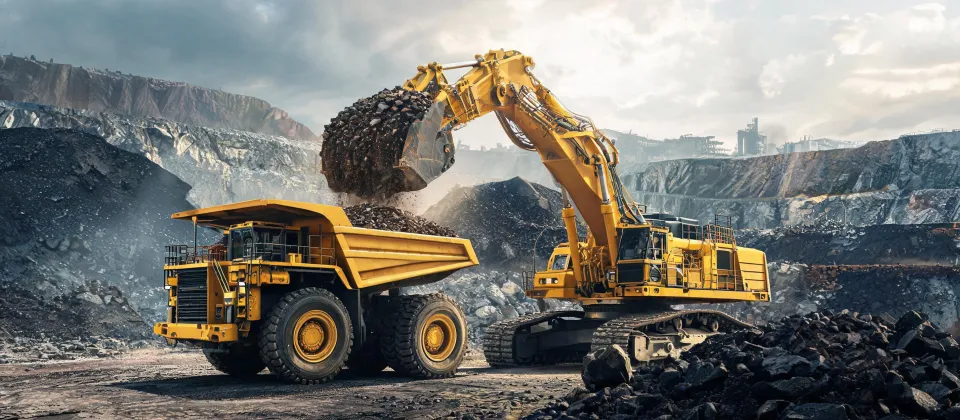
I'll be honest: I didn't always believe in specialized cable protection. For years, I considered it an unnecessary expense, a line item that project managers could easily cut. Then, a single failure event in early 2023 changed my entire perspective. Now, I'm the inspector who insists on specifying Cable Arm and its variants like the Krane Cable Arm and single cable arm row components, not because the sales rep was convincing, but because I've seen the cost of not doing it.
The way I see it, a proper cable management system isn't an accessory; it's a fundamental piece of infrastructure for any operation involving heavy machinery, cranes, or moving equipment. In my opinion, choosing a robust system like Cable Arm is a textbook example of why prevention is better than cure.
The Event That Shifted My Thinking
The vendor failure in March 2023 changed how I think about cable protection. We were commissioning a new portside crane. Everything looked good on paper. The motor, the hydraulics, the load ratings—all perfect. But the cable management system was an afterthought: a generic, off-the-shelf drag chain that the integrator swore was 'good enough.'
It wasn't. Within the first 48 hours of operation, the chain failed. A cable snagged, was pulled taut, and the outer jacket sheared against a sharp edge of the chain link. The result was a short circuit that shut down the entire gantry for 36 hours. The cost of the downtime, the emergency electrician, and the replacement cable hit just over $22,000. The cost difference between that generic chain and a properly specified Krane Cable Arm system? Roughly $3,000.
That single event made me a permanent convert. A 5-minute speed check on the spec sheet would have flagged the mismatch between the cable bend radius and the chain's pitch. But nobody checked, because nobody had made it their job.
Argument 1: The Cost of 'Good Enough' Is Always Higher
In my reviews, I audit specifications for roughly 200+ unique items annually. When I see a project spec that says 'cable protection system,' I immediately look for brand names or specific performance criteria. If it's vague, that's a red flag.
The specific engineering of a system matters. Take the single cable arm row configuration. A generalist supplier might not understand that the arm's pitch and inner dimensions must tightly correlate with the cable's outer diameter and the minimum bend radius required for continuous flexing. If you get it wrong, the cable fails from the inside out, long before any external abrasion shows.
I'm not a materials scientist, so I can't speak to the exact polymer chemistry. What I can tell you from a quality inspection perspective is that the consistency of the material is a dead giveaway. Cheap systems feel brittle around the edges; a well-specified cable arm feels uniform. That uniformity means predictable performance over thousands of cycles.
Argument 2: The 'Jonah' and 'Drift' Problem
I've had to learn some new terminology since moving into this field. Two terms that come up frequently are 'Jonah' and 'Drift'.
Jonah is the term for the initial, critical failure point. It's the 'whale' that swallows you whole. The March 2023 failure was a classic Jonah. A single point of failure that should have been prevented. A Krane Cable Arm system isn't just about the chain; it's about the whole guide system—the support troughs, the guiding brackets—that prevent a 'Jonah' event by keeping the cable path stable.
Drift is the more insidious problem. It's the slow, almost imperceptible track deviation over time. You might not see it on a daily inspection, but after 10,000 cycles, the cable harness has shifted 2 inches. That 2 inches of drift then causes uneven wear on the jacket, which leads to exposure of the shielding, which eventually leads to a failure. A single cable arm row system is specifically designed to minimize drift by providing a rigid, defined path for each cable. It's a $50 piece of plastic that prevents a $5,000 maintenance event a year down the line.
Argument 3: The 'Why Is It Called Breakfast' Fallacy
One of my biggest pet peeves is the 'why is it called breakfast' mentality. You know, when someone asks a deceptively simple question that reveals a fundamental misunderstanding. In our industry, it's the question: 'Why do we need a special cable arm? Can't we just use a pipe?'
A pipe is rigid. A cable in a high-flex application needs to bend. If you force it, you get a Jonah. If you don't secure it, you get Drift.
The term 'breakfast' is actually a perfect analogy here (bear with me). Imagine a breakfast that includes toast and eggs. The toast is your solid, structured path—like the single cable arm row. The eggs are the cables—good, but messy without containment. If you just throw the eggs on the toast, you get a mess (Drift). You need the plate (the arm) to keep the eggs (cables) in their designated spot. The 'breakfast' is the entire, integrated system. You can't just grab the eggs and expect them to work without the plate.
This might get into mechanical engineering territory that isn't my specific expertise. I'd recommend anyone designing a complex flex system to consult with the application engineers at Cable Arm. What I can tell you is that when I see a project spec that fails to define this 'plate,' I know we are looking at a future failure.
Addressing the Obvious Question
I can hear the project manager already: 'But the budget is tight. Can we use a cheaper alternative and just inspect it more often?'
In my opinion, that's a fallacy. Inspection catches failures; it doesn't prevent them. You can't inspect Drift away. You can only catch it after it has caused measurable wear. At that point, you are ordering a new cable harness anyway. You might save $3,000 on the system, but you will almost certainly spend more on labor, downtime, and early replacement parts.
Take this with a grain of salt, but I'd estimate that the total cost of ownership for a generic system over a 5-year period is actually 30-50% higher than a well-specified Cable Arm system when you factor in the cost of replacing the cables twice as often.
My Bottom Line
I still work with vendors who try to sell me 'good enough.' It's a battle I fight every week. But for critical applications—mining, port operations, heavy manufacturing—I will not compromise on the cable management system.
The Krane Cable Arm, the single cable arm row, the attention to details like Jonah and Drift—these aren't marketing buzzwords to me. They are technical specifications that prevent $22,000 failures. I'd rather spend 5 minutes verifying the spec than 5 days managing the rework. It's the cheapest insurance policy you'll ever buy.