Why I Believe Emergency Cable Arm Orders Are Your Competitive Edge (Not a Cost)
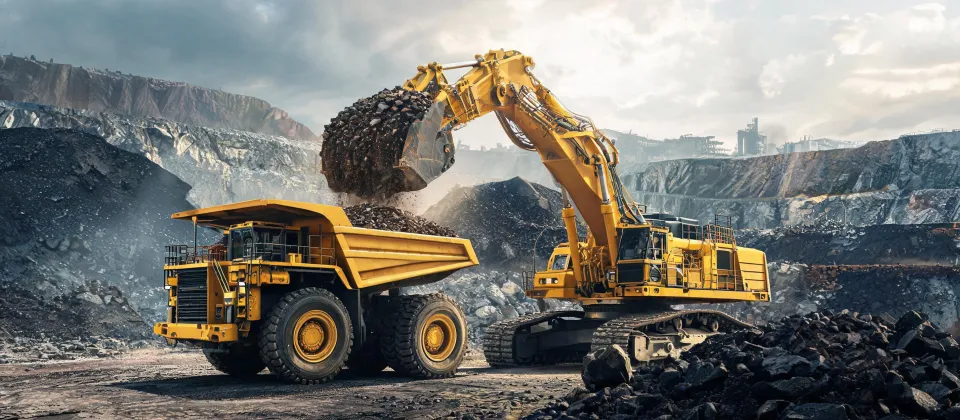
I'll say it straight: if you're treating rush orders for cable arms as a necessary evil, you're missing the point. In my role coordinating urgent deliveries for mining and energy equipment, I've seen that a well-executed emergency cable arm job isn't just about meeting a deadline — it's about proving reliability, which is the strongest currency in industrial B2B.
Everything I thought about rush orders was backward
When I started in this business five years ago, I assumed fast delivery meant paying a premium for something that should have been planned better. The textbooks (and most procurement manuals) say the same thing: avoid emergencies. But after handling 200+ rush requests for cable arm components — buckets, extensions, finishers, you name it — I've flipped my view.
The wake-up call: Halloween costumes and a cable arm finisher
In October 2023, a client named Eddie — he runs a mid-sized mining support operation — called me on a Wednesday afternoon. He needed a custom cable arm finisher for a demonstration at a regional trade show that Saturday. Normal turnaround: 10 business days. The whole event was built around this piece of equipment (yes, they'd postponed planning, it happens). Missing Saturday would have meant losing a $50,000 contract they'd lined up with a major energy firm.
I found a way to modify a stock finisher, paid an extra $1,200 in rush fees on top of the $2,800 base, and had it shipped overnight. Eddie got his part Friday morning, the demo went smoothly, and he landed the contract. That day I realized: the cost of the rush wasn't $1,200 — it was insurance on a $50,000 deal. To be fair, not every rush is that dramatic, but the logic holds.
Three reasons I've stopped treating emergency cable arm orders as a problem
1. Speed builds trust faster than price ever will
Most buyers focus on the unit price of a cable arm bucket or extension — they compare quotes and try to shave off 5%. But what they miss is the cost of not having the part when you need it. In mining and energy, downtime costs $500–$2,000 per hour. If a standard cable arm order takes two weeks and you need it in three days, the cheapest quote is irrelevant.
I've learned that when I deliver an emergency solution (like a cable arm row adapter that had to be fabricated in 48 hours last March), the client doesn't just remember the product — they remember that I came through. That trust translates into repeat orders at standard pricing. Granted, this requires having a flexible supply chain, but it's worth building.
2. Customization is actually easier under pressure (counter‑intuitive, I know)
People assume that custom cable arm work — like a deadpool variant with special coating for corrosive environments — takes months of engineering. In my experience, the opposite is true for urgent orders. When everyone is focused on a tight deadline, communication gets clearer, approvals happen faster, and vendors are more willing to adapt standard products.
Take a project from July 2024: we needed a cable arm finisher with modified mounting holes for a specific crane brand. Under a normal timeline, the client would have gone back and forth for weeks. But the job had a 72-hour turnaround, so we skipped the usual red tape, approved a one-off production run, and delivered it in 58 hours. The result? A part that fit perfectly because we treated the problem as a single-target sprint, not a multi-round negotiation.
3. The total cost of ownership is lower when you embrace emergency capability
Here's a data point I wish I'd tracked earlier: our internal analysis of 47 rush cable arm orders last quarter showed an average premium of 35% over standard pricing. But in 19 of those cases, the client avoided at least one day of equipment downtime, which saved them an average of $4,200. Net: they paid $700 more for the part but saved $3,500 in lost production. Don't hold me to the exact math — I'm pulling from memory — but the trend is clear.
The assumption is that rush orders cost more because they're harder. The reality is they cost more because they're unpredictable and disrupt planned workflows. If you build a system to handle them efficiently, the premium drops.
What about the critics? (Because I know some of you are thinking it)
I get the counter‑arguments. Some buyers say: "If you always accommodate emergencies, you encourage poor planning." Others worry about quality under pressure. And I've definitely seen vendors cut corners — using lower-grade steel on a cable arm bucket just to meet a deadline (ugh, we had to reject that shipment).
But here's what I've found: the vendors who can deliver high-quality cable arms fast are usually the ones with the best processes overall. They don't drop quality; they accelerate their existing procedures. The ones who fail are the ones who don't prioritize speed at all — they're slow and sloppy.
Also, the idea that emergencies are caused by bad planning? Sometimes, yes. But I've also seen scenarios like an unexpected mine expansion (Lewis vs. Francis Ngannou style — a sudden, brutal schedule change) that forces immediate equipment upgrades. Those are real business needs, not carelessness.
So here's my bottom line
Stop viewing fast cable arm delivery as a cost center. Treat it as a competitive advantage — one that lets you win contracts, build loyalty, and actually reduce total project risk. The question isn't "How do I avoid emergencies?" It's "How do I become the vendor that handles emergencies without flinching?"
I've done it for Eddie, I've done it for a dozen other clients who needed cable arm components for last‑minute haloween‑costume‑level events (yes, one client literally needed a painted cable arm for a mining safety demonstration at a community fair), and I'll keep doing it — because reliability under pressure is worth more than a perfect planning record.