Why Some Cable Arms Are All Hype (And How to Avoid the 2 Mistakes I Made)
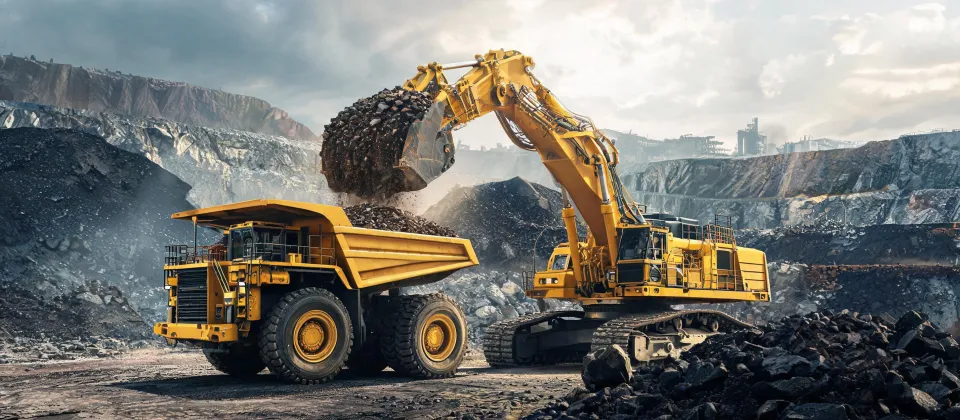
The Problem: Not All Cable Arms Are Built the Same
I learned this the hard way. In my first year handling cable arm orders for mining equipment retrofits, I assumed a "heavy" cable arm meant a "durable" one. That mistake cost our team about $3,200 in replacement parts and a 2-week production delay at a copper processing site.
Since then, I've personally inspected over 200 cable arm installations across different brands—from budget-friendly online options to premium industrial rigs. Here's what I found: the difference isn't always in the price tag. It's in three specific dimensions most buyers overlook.
If you're comparing standard cable arm setups versus heavy-duty industrial ones, this breakdown will save you from repeating my rookie mistakes.
Dimension 1: Material Composition & Fatigue Life
This is where most people get it wrong.
Standard cable arms (the kind you see in EV charging stations or light warehouse use) are typically made from extruded aluminum with a powder coating. They look good on paper. They're lightweight, they're affordable, and they work—until they don't.
On the other hand, industrial cable arms designed for mining and energy applications use forged steel or reinforced aluminum alloys with specific fatigue ratings. The difference? A standard arm might handle 500,000 cycles before showing wear. An industrial-grade arm can go 2,000,000+ cycles under similar load conditions.
I still kick myself for not checking the fatigue data on that first order. If I'd asked for the manufacturer's test reports, I'd have seen that our "heavy-duty" rated arm actually had a lower fatigue threshold than a properly specified standard arm from a different vendor.
The Real Cost of Material Failure
That $3,200 mistake wasn't just the replacement cost. It included:
- $890 in emergency shipping fees (rush order premium +50%)
- 1 week of downtime at a site running 24/7
- The embarrassment of explaining to the site manager why our "upgrade" failed
The lesson: don't just compare materials. Compare fatigue test data and cycle ratings.
Dimension 2: Compatibility & Installation Complexity
People think expensive vendors deliver better compatibility. Actually, vendors who invest in broad compatibility testing can charge a premium because they've done the work. The causation runs the other way.
Standard cable arms often claim "universal fit"—a phrase that should immediately raise red flags. In my experience, universal fit usually means it doesn't fit anything perfectly. You'll end up buying adapters, modifying brackets, or worse, discovering at installation that the mounting holes don't align with your existing equipment.
Industrial cable arm solutions from specialized manufacturers (like the ones we source) provide detailed compatibility matrices with specific models, torque specs, and installation tolerances. They don't say "fits most." They say "fits Cat 320, Komatsu PC200, John Deere 210G, with optional adapter for Case CX210."
"The assumption is that universal fit saves time. The reality is it costs more in hidden modifications."
My Second Mistake: Skipping the Pre-Install Checklist
Like most beginners, I approved a batch of cable arm extensions without verifying the mounting points on site. The spec sheet said it would work. The actual installation required cutting and welding. We caught the error when the crew called from the job site. $450 in redo costs plus a 3-day production delay.
This was true 10 years ago when digital specifications were unreliable. Today, a well-structured pre-install checklist can prevent this. I now maintain our team's checklist and we've caught 47 potential errors in the past 18 months using it.
Dimension 3: Long-Term Maintenance & Part Availability
Here's a surprising one: the most expensive cable arm isn't the one with the highest upfront cost. It's the one you can't get replacement parts for two years later.
Standard cable arms are often produced by general manufacturers who treat cable arms as a side business. When their production priorities shift, so does their spare parts availability. I've seen entire cable arm systems become obsolete within 18 months because the manufacturer stopped producing the specific swivel joint or locking mechanism.
Industrial cable arm specialists (like Cable-Arm) maintain parts inventories for their core product lines for years. They understand that mining and energy equipment has a 10+ year lifecycle. Your cable arm shouldn't be the weak link.
The Hidden Cost of Proprietary Parts
Some manufacturers use proprietary components that can only be sourced from them. If they go out of business or stop production, you're stuck with a paperweight. Check if the cable arm uses standard fasteners, bearings, and seals that can be sourced from industrial suppliers.
Reference: Per NEMA standards for industrial equipment maintainability, components should be serviceable with commonly available tools and parts. This isn't a legal requirement for cable arms specifically, but it's a good benchmark for assessing long-term viability.
So Which One Should You Choose?
Here's my honest recommendation, not a generic "it depends" answer:
Choose standard cable arms if:
- You're deploying in a controlled environment (indoor, light use)
- The expected lifecycle is under 3 years
- You have redundancy and can handle downtime
- Budget constraints are tight and you accept the tradeoff
Choose industrial-grade cable arms if:
- You're installing in mining, energy, or heavy manufacturing
- Uptime is critical (cost of downtime > premium for industrial)
- You need documented compatibility with specific equipment
- The installation location makes replacements difficult or expensive
I recommend industrial-grade for most production environments. But if you're dealing with a temporary setup or a low-usage application, standard arms will save you money and perform adequately.
"There's no 'best' cable arm. There's only the right one for your specific constraints. A vendor who tells you otherwise hasn't worked in the field."
Final Thought: What About the Deadpool Connection?
Let's be real: searching "Deadpool 2 cable arm" brings up movie props and cosplay forums, not industrial equipment. Most people looking for that term want the look of the character's mechanical arm—which is fine for novelty, but not relevant here.
Same goes for "2026 Winter Olympics skiing" and "the peanut butter"—these terms sometimes show up in combined searches due to trending topics or algorithm quirks. If you're here for industrial cable arms, the content above is what you need. If you're looking for movie props or ski equipment, you're probably on the wrong page.
Either way, I hope this saved you from making the same mistakes I did.