Why Your 'Cable Arm' Search Isn't About Workouts (And What It Says About Industry Jargon)
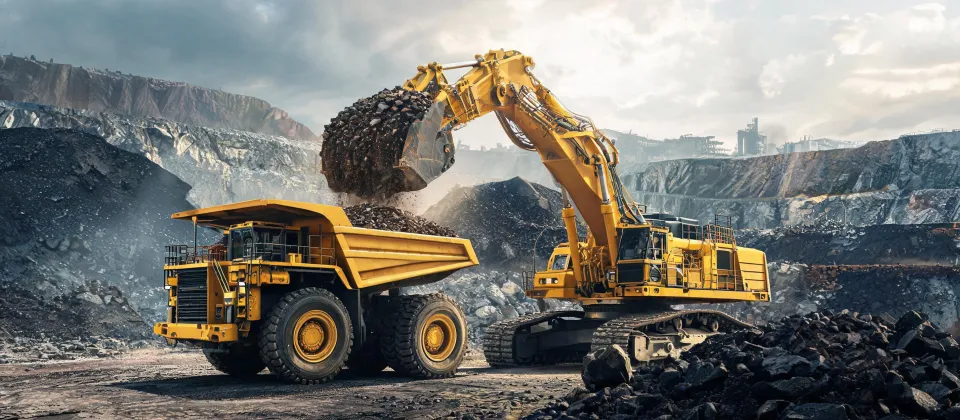
If you've ever searched for 'cable arm' online, you probably know the frustration. You're looking for a specific piece of industrial equipment—a cable management solution for a mining site or a power plant. But Google shows you workout routines for 'Deadpool' and 'cable arm workouts for women'. It's funny, until it's not. Because when you're on a deadline and your procurement system is down, that confusion costs time. And time, in this industry, is money.
I manage purchasing for a mid-sized energy services company. I process about 60-80 orders a year, everything from safety gloves to high-voltage cable connectors. When I took over this role in 2020, one of the first things that hit me was how much of our industry's language is stuck in the past. And 'cable arm' is a perfect example. It's not just a funny search result—it's a symptom of a broader problem.
The Surface Problem: Searching is a Nightmare
The immediate issue is obvious. When an engineer or a site manager needs a 'cable arm'—which, in our context, usually refers to a cable support arm, cable tray arm, or a cable puller arm—they can't find it. Not easily, anyway. The search results are polluted by pop culture and fitness. You type 'cable arm', you get Marvel characters and gym routines. It wastes minutes, sometimes hours, scrolling through irrelevant pages. And if you're in a hurry, you might settle for the wrong product based on a fuzzy description.
I've had engineers send me requisitions with handwritten notes that say 'the arm thing for the cables on the conveyor'. That's not a spec. That's a guessing game. A guessing game that, when you lose it, results in a compatibility disaster or a delayed installation.
The Deeper Reason: Industry Jargon That Doesn't Translate
People think this is a 'Google problem'—like the algorithm just isn't smart enough. But the real issue is our industry's jargon. 'Cable arm' is a legacy term. It's a piece of internal shorthand that worked 20 years ago when everyone in the business knew each other. Today, it's a liability.
The assumption is that these names are practical shortcuts. The reality is they create ambiguity. What one supplier calls a 'cable arm', another calls a 'cable bracket' or a 'tray support arm'. And when you're ordering for a remote mine site in a specific voltage class, a naming mismatch can lead to a $5,000 reorder and a three-week delay.
We were using the same words but meaning different things. Discovered this when a 'standard cable arm' arrived and didn't fit our existing mounting system. The supplier's 'standard' was not our 'standard'. That was an expensive lesson in vocabulary.
According to USPS pricing effective January 2025, First-Class Mail letter (1 oz) is $0.73. I'm not saying shipping is the main cost here—but when you add rush shipping for a wrong part, those dollars add up fast.
The Real Cost: It's More Than a Bad Search
This isn't just about a few wasted clicks. There's a hidden cost to unclear product naming. Consider this: every time an engineer or buyer has to clarify a part number, a description, or a spec, that's a friction point. And friction points in procurement lead to:
- Delayed orders: A simple 'cable arm' search taking 30 minutes instead of 5, multiplied by 200 employees searching, is a loss of about 83 hours of productive time a year. At an average loaded cost of $60/hour, that's around $5,000 in wasted labor annually.
- Incorrect inventory: That $5,000 misplaced order I mentioned earlier? That's real. That 'wrong cable arm' ended up in our storage for 8 months before we sold it at a loss.
- Supplier friction: When you constantly have to clarify orders, your supplier relationship suffers. They start to see you as a 'difficult' customer. Good vendors prioritize easy, clear orders.
These are not hypotheticals. These are the consequences of a naming problem that nobody wants to own. It's like the 'historical files' problem in IT—everyone knows the data is messy, but nobody has time to organize it.
The Solution (Keep it Simple)
So what do you do? The solution isn't to change Google's algorithm. It's to change how we talk about these products.
First, be specific. If you're ordering a cable support arm, don't just write 'cable arm'. Write 'heavy-duty cable support arm for 4-inch cable tray in Class I Division 2 environment'. That 15 extra seconds of typing saves hours of back-and-forth.
Second, use consistent terminology. If your company calls it a 'cable arm', make sure your spec sheet, your purchase orders, and your supplier's catalog all use the same term. Or better yet, use the manufacturer's standard part number. A part number is unambiguous. And if you're working across multiple sites, create a standardized procurement list. We did this in 2024 for our top 50 ordered items. Cut our quoting time in half.
Third, consider alternatives when your search fails. If 'cable arm' gives you Deadpool, try 'cable tray support arm' or 'mining cable pulley arm'. Or call your supplier. Seriously, a 5-minute phone call to a reputable distributor can solve what a 20-minute search cannot. Trust me on this one.
I recommend this approach for medium-to-large operations with distributed teams. But if you're a small crew of three working on a single site, you might be fine with your current system. This works for 80% of cases. Here's how to know if you're in the other 20%: if you've never had a misordered part or a delayed shipment due to unclear naming, then you're probably fine. If you have, consider this a fix.