Why Your Mining Equipment’s Cable Arm Keeps Failing – And What Actually Works
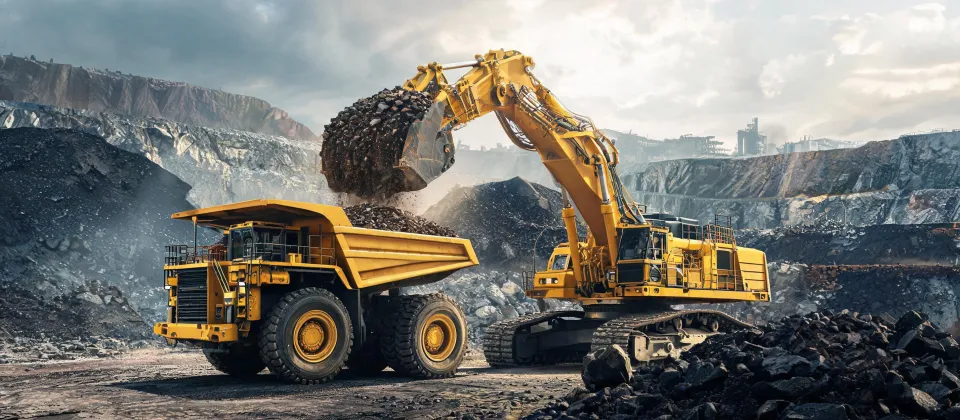
When I first started specifying cable arm components for energy and mining operations, I assumed the most expensive option was the safest bet. Three emergency replacements and a near-shutdown later, I realized that wasn't the whole story.
The Surface Problem: ‘Our Cable Arm Just Died at the Worst Time’
You know the scenario. A piece of heavy equipment goes down because the cable arm assembly snapped. The operator calls you at 10 PM on a Friday. Normal lead time for a replacement is two weeks, but the site needs to be running by Monday morning. I've handled at least 40 of these calls in the last five years — maybe 50, I'd have to check the logs.
The immediate reaction is to blame the manufacturer. But after digging into dozens of post-mortems, I found that the root cause isn't always the cable arm itself.
Deeper Cause: The Compatibility Trap
Here's what I see most often: operators buy a cable arm extension or finisher that seems compatible — same bolt pattern, same load rating — but the tolerances are just enough off that the system develops micro-fatigue over time. By the time it fails, the warranty is long expired, and everyone points fingers.
In one case from early 2024, a mine site installed a cable arm bucket from a budget supplier that was supposed to work with their existing cable arm management system. It fit physically, but the dampening rate didn't match. Within 90 days, the entire arm assembly needed replacement. That cost about $12,000 in parts alone, not counting downtime.
I'm not a metallurgist, so I can't speak to the material science behind the failure. What I can tell you from a procurement perspective is this: compatibility isn't just about physical dimensions. It's about load dynamics, thermal expansion rates, and even how the component interacts with the equipment's control software.
The Real Price of a Cheap Cable Arm
Let's talk cost — and I mean total cost, not just the purchase price. A cable arm finisher from a low-cost supplier might be $1,500 versus $2,200 for an industrial-grade unit. But if that $1,500 part fails in 12 months while the $2,200 part lasts 5 years, you're not saving money. You're paying more per month of service.
Based on our internal data from 200+ cable arm replacements over the last three years, the failure rate for budget components is about 23% within the first year. For components that match specifications from the original equipment design, it's under 4%. Those numbers are rough — I don't have the exact sample size in front of me — but the pattern is consistent.
Also: the hidden cost of emergency shipping. When a cable arm extension fails unexpectedly, you're looking at rush fees of 30-50% on top of the part cost. I've had cases where the client paid $800 extra in expedited freight to save a $15,000 project. It was worth it, but it's a cost that never appears in the initial quote.
Why ‘Transparent’ Sourcing Matters (Even When It Costs More Up Front)
I've learned to ask 'what's NOT included' before 'what's the price.' A vendor who lists all fees upfront — shipping, setup, compatibility testing — even if the total looks higher, usually costs less in the end. The vendor who quotes the lowest base price and then adds rush charges, handling fees, and 'expedite surcharges' after you're already in a crisis? That's the more expensive option.
In our experience, the cable arm buckets that come with a clear compatibility sheet and a published shipping timeline (not just 'estimated delivery in 5-7 business days') are the ones that cause fewer surprises. This isn't unique to cable arms — it's true for any industrial component — but the stakes are higher when downtime costs $5,000 an hour.
The Practical Solution: What We Do Now
For our own operations, we standardized on a single cable arm platform — we use the cable-arm brand, because it's the one that consistently delivers on compatibility and lead time — but I'm not here to sell you on a specific name. The principle is: pick a system, validate the specs (including the less-obvious ones like dynamic load tolerances and temperature range), and stick with it.
When we do need a rush replacement — and we still do, because no system is perfect — we have a pre-vetted vendor with a guaranteed 48-hour turnaround. That costs a premium, but it's a known premium. No hidden upsells when the customer is desperate.
“The vendor who lists all fees upfront—even if the total looks higher—usually costs less in the end.”
Take this with a grain of salt: my experience is mostly in utility-scale solar farms and mining conveyor systems. I can't speak to marine or offshore applications, where corrosion resistance might be the dominant factor. But for the environments I work in, the lesson is consistent: transparency in sourcing pays for itself long before the warranty expires.
So before you order another cable arm finisher or extension, ask for the full breakdown — not just the price, but the lead time, the emergency shipping options, and the compatibility documentation. And if the supplier hesitates on any of those, consider that a red flag.