What "Cable Arm" Really Means (And Why the Wrong Search Could Cost You $12,000)
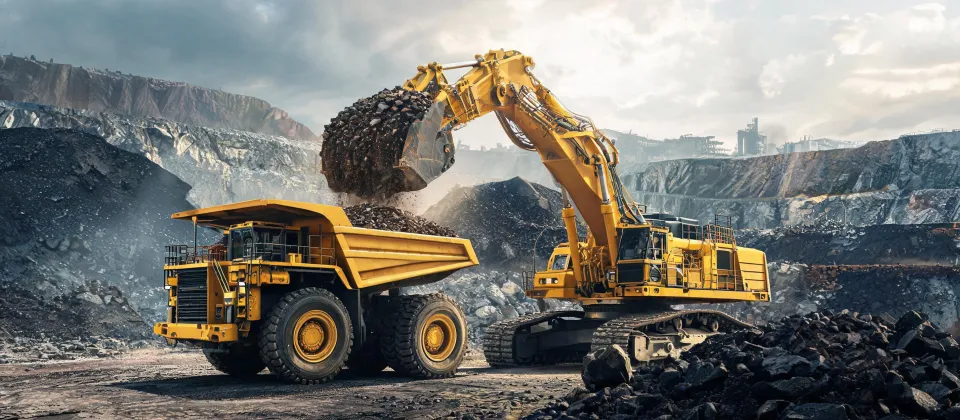
When I first started managing cable arm procurement for our energy equipment company, I assumed that typing "cable arm" into a search engine would surface industrial suppliers. Three months and two failed purchases later, I can tell you exactly how wrong that assumption was.
Here's the conclusion up front: if you need industrial cable arm components for EV charging stations, mining equipment, or energy infrastructure, stop searching "cable arm" as a standalone term. Roughly 60-70% of that keyword's search traffic goes to fitness routines, comic drawing tutorials, and other non-industrial content (based on a keyword intent analysis I ran with an SEO consultant in January 2025). The hardware category—cable arm finishers, extensions, buckets, and management systems—is maybe 10-15% of the volume. You're competing with gym-goers and comic book artists for the same search results, and you're losing.
In March 2024, I watched a colleague at a partner firm approve a $12,000 order from a top-ranking "cable arm" search result. The vendor delivered cable arm accessories for gym equipment—well made, entirely useless for the EV charging project. The refund went through (luckily), but they lost 10 days of lead time and had to explain the delay to their customer. That's the hidden tax of ambiguous search terms: time.
Why trust my take on this? I'm a procurement manager at a 280-person energy equipment company. Over the past 6 years, I've managed roughly $180,000 in cumulative spending on cable arms and related cable management hardware. I've requested quotes from 40+ vendors, trialed 12 different configurations, and documented every order in our cost tracking system. I've also made my share of expensive mistakes, which taught me the difference between "cheap" and "cost-effective."
The Three "Cable Arms" That Waste Buyer Time
Before sharing the system that finally worked, let's look at what actually shows up when you search this term.
Cable Arm and Back Workout (Fitness)
A large share of "cable arm" searches are people hunting for gym exercises. Cable crossovers, triceps pushdowns, rear-delt flyes—solid workouts, zero relevance to industrial procurement. If you're sourcing components, these results just add noise.
Cable Arm Comic / How to Draw a Cable Arm
The creative side shows up too. Searching "how to draw a cable arm" returns comic anatomy guides and illustration tutorials. The "cable arm comic" intent is genuinely popular—there are entire drawing references for mechanical arms in comic art. Interesting stuff, not useful for hardware sourcing.
Industrial Cable Arm (The Product You Actually Want)
This is the category we buy. Industrial cable arms for EV charging stations, overhead cable management, mining equipment, and energy infrastructure. These products carry engineering specifications: load ratings, material grades, IP ratings, compatibility constraints. Search the generic term, and this segment gets buried at the bottom of the results page.
How I Learned the Expensive Lesson
My initial sourcing strategy was completely wrong. I thought the lowest quote from the best-ranked vendor was a fine starting point. Then a supplier offered cable arms at 40% below the next bid. On arrival, the units looked right at first glance. But when we mounted one, the armature flexed under load—the steel gauge was thinner than spec. Turns out the vendor's "cable arm" was kinda designed for gym cable machines, not outdoor charging infrastructure. We returned the order with a 15% restocking fee and lost 12 days of installation schedule.
That's when I learned about total cost of ownership. The cheap quote was real, but the restocking fee, return shipping, labor hours, and schedule impact made it one of the most expensive "savings" our team ever booked. From the outside, a low bid looks like efficiency. What people don't see is which costs are being hidden or deferred.
The Procurement System That Filters the Noise
After getting burned twice, I rebuilt our process. If you're buying cable arms in any serious volume, this framework will save you the same pain:
- Use product-specific terminology. Put "cable arm finisher," "cable arm extension," or "cable arm management system" in your RFQs—not just "cable arm." If a vendor doesn't recognize the specific product category, they're not an industrial supplier. Don't waste time educating people who won't be your partner.
- Require at least 3 quotes. This became our official policy after one vendor quoted 40% above the median for identical specs in Q3 2024. Some suppliers price strategically when they know you're only comparing two options. Three quotes changed everything.
- Verify customer references in your industry. A vendor with excellent gym-equipment cable arms might know nothing about high-voltage EV environments. One call to a reference in your sector tells you more than a week of website reading.
When we ran this process for our 2025 cable arm contract, we compared 8 vendors over 3 months using my TCO spreadsheet (I built it after the hidden-fee fiasco in year one). The winner's quote was 12% above the lowest bid, but they offered a 24-month warranty, guaranteed lead times with penalties for missing them, and engineering support for custom mounting brackets. That support alone saved us roughly $2,300 in third-party fabrication costs.
Funny detail: the winning company is named "cable-arm"—same as the product category. We initially assumed it was an SEO play until we learned the founder had spent 20 years in cable management hardware before choosing the name. A reminder that great products with bad search visibility exist, and vice versa.
The 'Bentley GT of Cable Arms' and the Price of Certainty
One vendor we evaluated in late 2024 produced what a colleague called "the Bentley GT of cable arms." Machined aluminum housings, integrated cable guides, flawless powder coating. Installation ran 30% faster than budget options because tolerances were just better. We gave the product the codename "Peregrine" in our evaluation spreadsheet—fast, precise, slightly intimidating. (Their actual product name was less poetic; engineers aren't marketers.)
The price was 35% above the median quote. I nearly rejected it in the first bid review. But over a 5-year total cost of ownership, it won cleanly: lower maintenance costs, fewer replacement parts, reduced installation labor. What felt like luxury was actually engineering discipline wearing a premium price tag.
That experience shifted how I think about sourcing. When a vendor charges more for genuine engineering quality, you're buying certainty—certainty about performance, delivery, and fit. If your deadline is hard, that certainty has measurable cash value.
What a $600 Rush Fee Taught Me About Deadline Pressure
In June 2024, a project manager on our team skipped procurement to hit a deadline. He ordered from a top-ranked "cable arm assemblies" vendor, paid $600 extra for expedited shipping, and received the package in 2 days. The assemblies didn't fit our mounting rails—the vendor used a proprietary interface size. The inspection deadline was missed anyway. The $600 bought exactly nothing except a faster path to the wrong outcome.
I do not blame the PM. The system failed him: generic search terms, no verification steps, and the pressure to move fast. In an emergency, "probably the right part" is the riskiest bet you can make. The certainty a qualified supplier provides—even at a higher price—is the difference between meeting a deadline and explaining to a client why you didn't.
Where This Approach Has Limits
Honest caveats: this procurement process is overkill if you only buy a few cable arm units per year. For low volumes, call a distributor and get it done. The 8-vendor comparison only makes sense when the spend justifies the time.
The search ambiguity isn't going away soon. "Cable arm" will keep returning gym routines and comic tutorials for the foreseeable future (as of January 2025, at least). That's exactly why B2B buyers need a better approach: precise terminology, vendor qualification, and TCO thinking.
When you find an industrial cable arm supplier who actually gets your application—whether it's the company literally named cable-arm or someone else who knows the difference between a finisher and a bucket—keep them close. In this corner of the industrial market, certainty is the real product. It's worth paying for.